 Add Row
  Add
Add 


There are still places in England where one can walk for half an hour and hear nothing but birdsong and one’s own thoughts. In Charnwood Leicestershire, beneath a pewter spring sky, I found precisely that.
Fallow deer grazed calmly under ruined brick walls at Bradgate Park, in the house where Lady Jane Grey first opened her eyes to a world that would treat her poorly and briefly crown her queen. Fieldfares flickered in the hedges. Skylarks stitched invisible music into the mist. Ahead of me, rising from bracken and granite outcrops, stood Old John Tower — a folly of such cheerful solidity it resembles, from certain angles, an oversized tankard planted on the hill.
It was gloriously empty.
In an age when England’s prettiest corners feel booked solid and priced accordingly, Charnwood remains an anomaly. It is not unspoilt in a precious sense, nor aggressively curated. It is simply lived-in countryside — wooded hills, proper villages, working farms, solid pubs — that has not yet succumbed to the exhausting self-awareness of Instagram tourism. Think of it, if you must, as a quieter, more rational Cotswolds, with better trains and fewer affectations.
And it sits, conveniently and without fuss, between Leicester and the Nottinghamshire border.
Bradgate Park: Granite, Deer and a Sense of Perspective


Bradgate Park is no secret to Leicestershire residents, but approach it on a moody weekday morning and you may feel you have inherited it outright. The ancient oaks twist like arthritic philosophers. Granite outcrops push through the earth as though the landscape itself were shrugging.
Bus 154 from Loughborough winds through thatched cottages, half-timbered houses and improbable chimney stacks of rugged Charnwood stone. Snowdrops gather in drifts in late winter; in early spring, mist lingers over Cropston Reservoir. Alight near The Badger’s Sett, take Causeway Lane — a stony, unassuming track — and suddenly the park opens wide before you, water and hill in dignified conversation.
The ruins of Bradgate House are not prettified. They are brick, roofless, honest. One is reminded that history here is not theatrical; it is embedded. Lady Jane Grey’s nine-day reign feels less like pageantry and more like warning.
It is difficult not to reflect, while standing on those slopes, on how fortunate we are in Leicestershire to have such scale without spectacle.
Loughborough: A Sensible Base with Surprising Depth
If Charnwood is the landscape, Loughborough is the hinge upon which it turns. Just over an hour from London by train and under an hour from Sheffield, it is one of those towns that functions without drama. It has markets, cafés, buses that generally arrive, and — most importantly — character.
A short stroll from the market square stands the Loughborough Bellfoundry, the last working bellfoundry in the United Kingdom. That alone warrants attention.
The Bellfoundry: Industry with a Soul
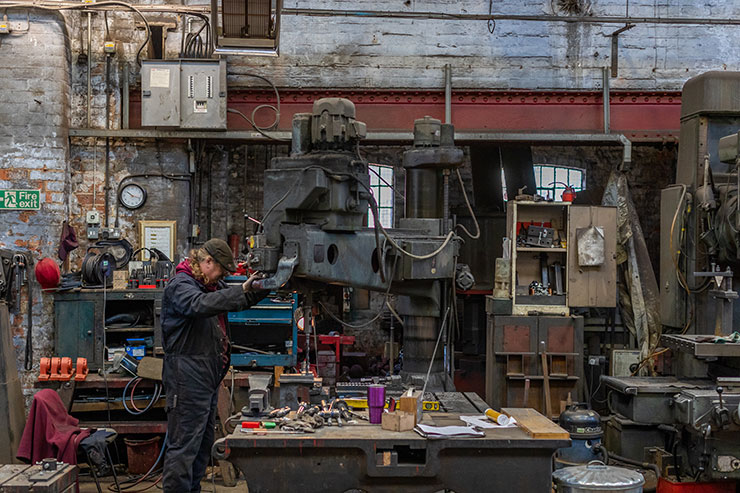
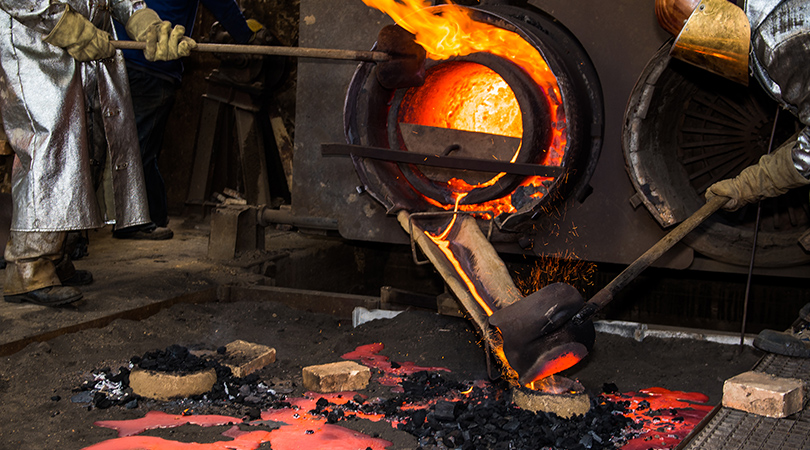
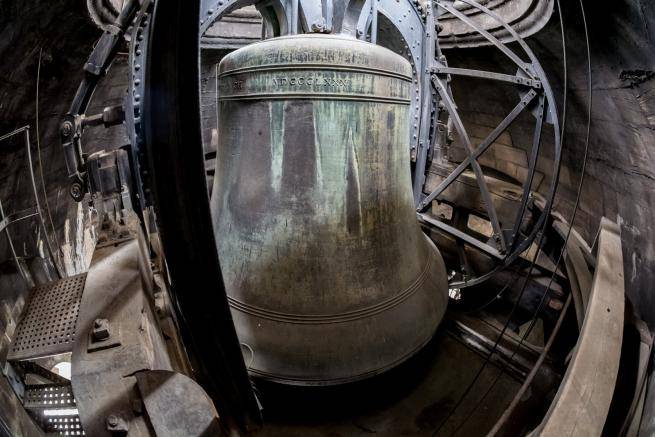
Inside, sparks scatter from a metalworker’s bench. There is the unmistakable smell of wood shavings in the wheel workshop and, most impressively, an 18-foot sandpit used for cooling casts. It is industrial, yes — but also deeply human.
This is the foundry that cast Great Paul for St Paul's Cathedral — Britain’s largest church bell — and supplied bells to York Minster and as far afield as St Andrew's Cathedral. Freshly cast and newly restored bells await dispatch to Truro, Paisley, Betws-y-Coed and Stow-on-the-Wold. It is a reminder that even in an age of digital abstraction, we still gather to ring metal and mark time.
Our guide, Lianne Brooks, rings in four church towers each week. “One pull on a rope and I was hooked,” she tells us, and demonstrates. The sound is not merely heard; it is felt — a low seismic hum that settles somewhere behind the ribs.
Entry to the museum is modestly priced; tours are thorough. One leaves not simply informed but reassured that certain crafts endure.
Steam and Volunteer Spirit: The Great Central Railway


Two minutes away lies the Great Central Railway — a heritage line that does not merely trade in nostalgia but operates with ambition. With whistle and steam we depart Loughborough, passing badger-sett banks en route to Quorn and Woodhouse, preserved in 1940s detail. A Naafi-style café glows beneath a railway bridge; wartime songs hum from a wireless beside a log fire.
More than 700 volunteers keep this enterprise alive — shovelling coal, polishing brass, pouring tea. Chief fire inspector Ken Scriven, a long-standing volunteer driver and former mainline fireman, remarks with dry candour that new recruits are essential.
Ambitious plans — with planning permission secured — aim to reconnect the line through to Nottingham, one of Europe’s most significant heritage rail projects. Television producers already appreciate its photogenic platforms; series from The Crown to Happy Valley have used them. Yet it never feels like a set. It feels lived-in.
As we roll towards Leicester, we cross Swithland Reservoir, bullrush-framed and luminous in the sinking light. Swans glide; dining passengers pause mid-conversation.
It is difficult not to feel that this is what heritage ought to be: functioning, not fossilised.
Burleigh Court: Modern Comfort without Pretence
Accommodation at Burleigh Court Hotel, on the edge of Loughborough University’s campus, provides a practical and surprisingly refined base. Tawny owls call from nearby bluebell woods. The Sprint Bus runs every ten minutes into town.
A recent £4.5 million refurbishment introduced the stylish Fifty Restaurant and a bar named in honour of Lionesses Karen Carney and Jill Scott, both alumnae. The menu balances sustainability with indulgence — plant-forward without sermonising. Cocktails make creative use of surplus produce; I sampled a chocolate-toned “Beet the Waste” while a braver soul tackled the Cauliflower Colada.
It is contemporary, certainly, but not self-conscious. A spa with a proper pool rounds things out. Doubles begin at sensible rates.
John’s House: Rural Excellence without Fuss
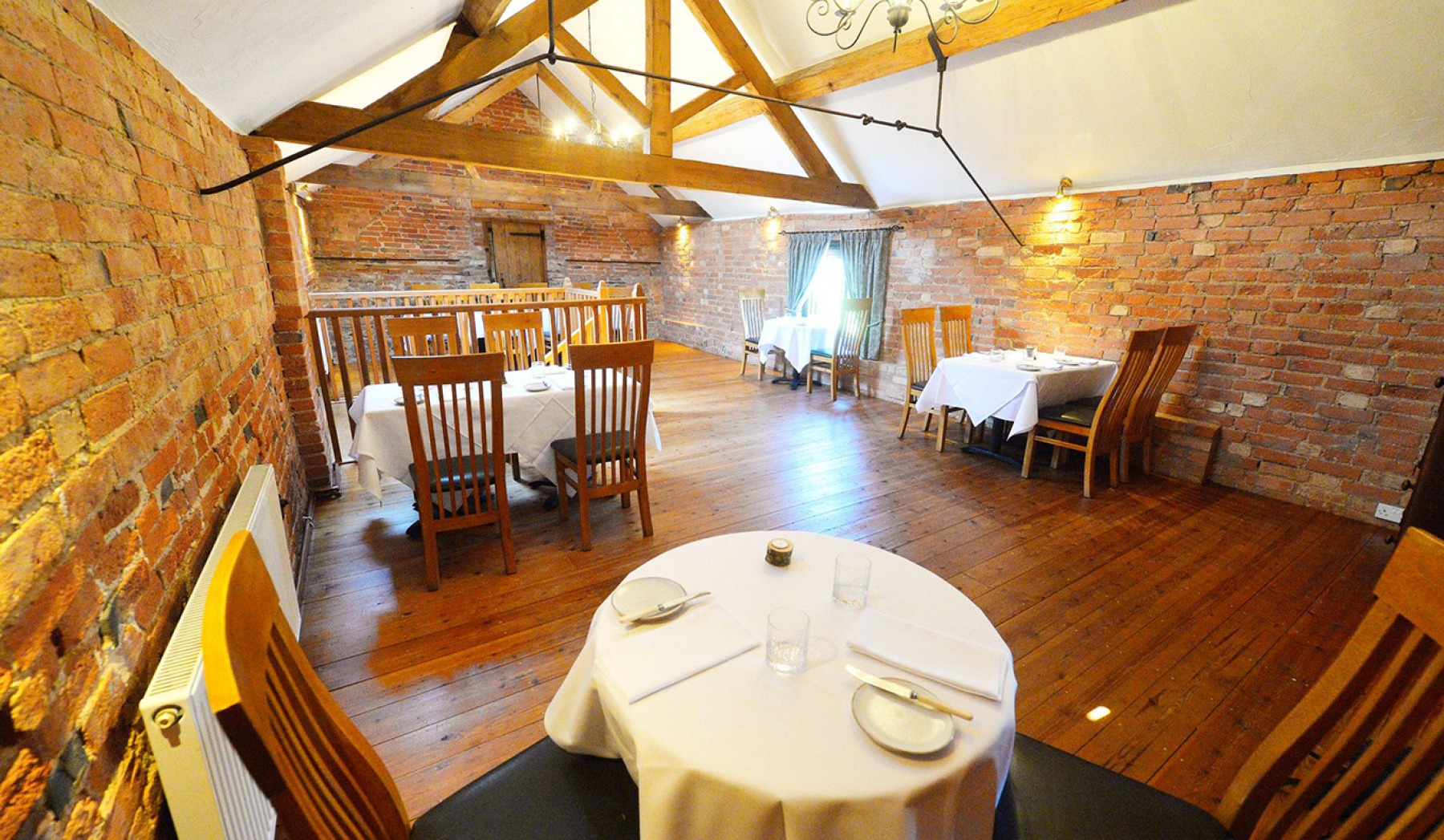
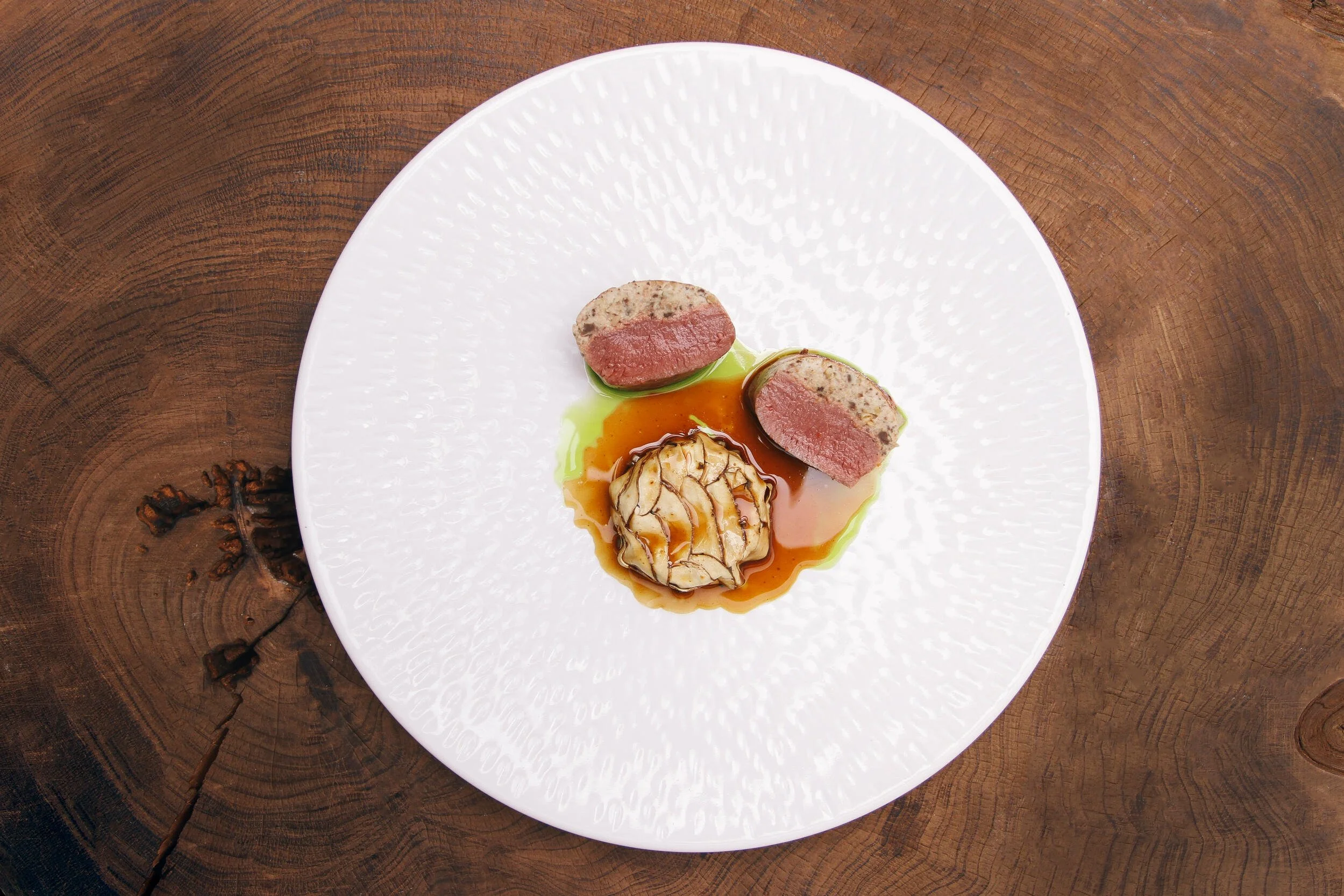

Leicestershire’s only Michelin-starred restaurant, John's House, sits on a working farm in Mountsorrel. The building is beamed and brick; the welcome is warm but untheatrical.
John Duffin’s brother Tom jokes that he's a fortunate asset in the kitchen. Lunch might include hogget raised on the land outside, paired with locally foraged mushrooms. Venison arrives from Bradgate Park. The tasting menu features fallow deer with walnut wine and potatoes elevated with smoked eel and lovage.
Step outside and Stonehurst Farm continues its business — Leicester Longwool sheep with their magnificent curls, Tamworth pigs rooting with purpose, piglets climbing over a tolerant sow. There are Easter lambs imminent, and a new indoor play barn for families. It is farming as reality, not backdrop.
One leaves well-fed and faintly proud that such a place exists here, not in some overexposed gastronomic enclave.
Barrow upon Soar: A Proper Pub Ending
Floodplain paths can thwart even the most determined rambler; on my visit, the River Soar had enthusiastically expanded beyond its banks. The road route via The Slabs proved more reliable, leading at last to The Blacksmith's Arms.
The relief of stepping from icy drizzle into fire-warmed timber is not easily overstated. A mushroom wellington with deeply savoury mash paired admirably with golden ales from Charnwood Brewery. Outside the window: narrowboats, willow-fringed water, flocks of geese negotiating winter.
Hourly trains from Barrow upon Soar return to Loughborough in five minutes. Civilisation, you might say, at a manageable pace.
Why Charnwood Matters
Charnwood Leicestershire does not shout. It does not brand itself relentlessly. It offers instead something increasingly rare: continuity.
Granite hills older than memory. Bells cast by hand. Steam engines maintained by volunteers who believe the work matters. Farms that feed restaurants without turning agriculture into theatre. Pubs that warm rather than perform.
In a country sometimes overly eager to reinvent itself, Charnwood stands as a reminder that preservation and progress need not be adversaries. Planning permission for rail expansion sits comfortably alongside 18-foot sandpits for cooling molten metal. Plant-based cocktails coexist with hogget and venison.
It is balanced. It is grounded. It is English in the most reassuring sense.
And, for now at least, it remains refreshingly under the radar.
If you are weary of queues masquerading as charm, consider Charnwood Leicestershire. Walk up to Old John Tower on a misted morning. Listen for skylarks. Let the deer carry on unperturbed.
You may find — as I did — that the finest luxury is not spectacle, but space.
By James Blair.




Write A Comment