Add Row
Add Element
Leicestershire Life. About living life in Leicestershire with news, events, fitness, health, lifestyle and local information.
update

Heartland Pulse Leicestershire

update
Add Element
  • Home
  • Categories
    • Leicestershire
    • Lifestyle
    • Fitness
    • Health
    • Events
    • News
    • Community
    • Local
    • Recreation
    • Culture
    • Featured
    • Directory
    • Your Experts
  • People Also Ask
  • Get Featured
August 25.2025
3 Minutes Read

Lynx Lower Body Spray: Time to freshen up your grooming routine

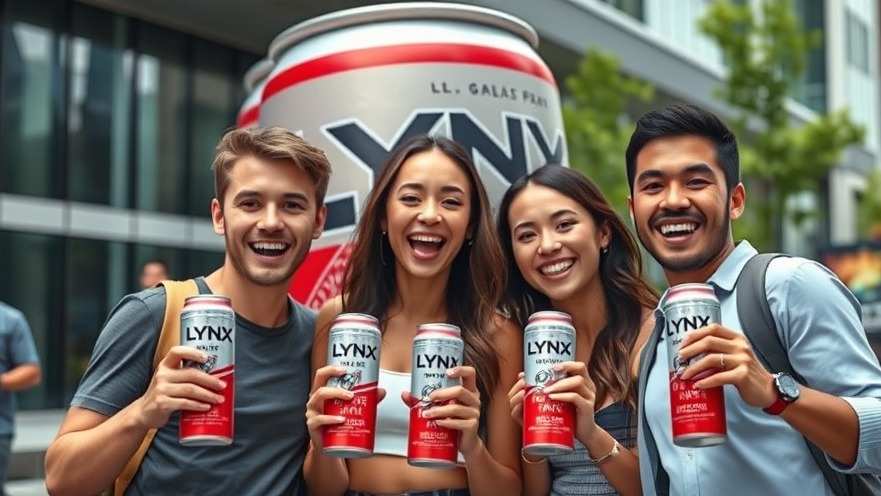
Cheerful group promoting new grooming products for men with Lynx body spray.


Is it really a game changer?

Lynx has decisively entered a surprisingly sensitive arena with its new Lower Body Spray designed specifically for those hard-to-reach areas. Amid a landscape where men typically lean only on deodorant and cologne, this product aims to redefine intimate grooming. The reality is, many guys have been left to their own devices, using anything from air freshener to vinegar in a desperate attempt to smell fresh—strategies that lack practicality and certainly do little for confidence.

The launch event that caught everyone's attention

Launched at Boxpark Shoreditch, this product debut featured a giant pair of scented boxer shorts alongside a quirky ball pit designed to get passersby engaged in personal grooming discussions. With influencers like Pete Wicks fronting the campaign, it generated significant buzz, straddling that fine line between fun and informative, effectively shifting the narrative from awkwardness to acceptance. More importantly, it aimed to destigmatise a topic that has been previously relegated to hushed conversations.

Statistics that speak volumes

According to a recent survey involving 2,000 men in the UK, a staggering 98% expressed a desire for their lower body to smell just as fresh as the rest of their body. This statistic magnifies the lack of appropriate products on the market. The revelation that many men have resorted to makeshift solutions reveals a significant gap in the grooming industry—a gap Lynx has gleefully plunged into with its robust, dermatologist-tested formula.

A cultural shift in male grooming

This move represents more than just a new product; it is indicative of a larger cultural shift among younger men, notably Millennials and Gen Z. Unlike previous generations, these groups are increasingly open about personal care, convening over grooming tactics and prioritising self-care routines. Discussions that were once brushed aside are now at the forefront, signalling it is indeed a new day for male grooming.

Practical benefits of using Lynx Lower Body Spray

So, what does practicality look like? For starters, it’s formulated to be alcohol-free with up to 72 hours of odour protection, making it a useful addition to any grooming routine, whether you’re hitting the gym or handling a long day at work. Smells like Coconut & Sandalwood or Pear & Cedarwood promise freshness and confidence. You wouldn't dare skip out on moisturising your skin or choosing the right shampoo; why not apply the same logic to your lower region? This product has the potential to make routine grooming both positive and entertaining.

Is your body care routine complete?

Maybe Lynx’s foray into lower body care serves as a wake-up call. As society continues to evolve in its understanding and appreciation of personal care, men, especially in Leicestershire, must adapt too. The reality is it's not just about being physically clean anymore; it’s about feeling fresh and confident, and eliminating the embarrassment associated with the taboo of grooming "down there".

The future of men’s grooming

What’s next? If Lynx's attention to this often-ignored area is an indication, the landscape of male grooming will continue to expand. Other brands may feel the need to follow suit, crafting their offerings to address all facets of male care. This could open the door to an array of innovative products, enhancing men’s grooming regimens—one spray at a time.

The power of community discussions

Ultimately, the introduction of Lynx's Lower Body Spray is also about fostering community discussions. Conversations that were once exclusively whispered about are blossoming into open discourse among friends and family. By normalising these chats, Lynx not only sells a product, it encourages younger generations to take their grooming seriously. And, let’s be honest, that can only be a positive outcome.


Culture

7 Views

0 Comments

Write A Comment

*
*
Please complete the captcha to submit your comment.
Related Posts All Posts
03.18.2026

The race for UK Town of Culture reveals the quiet pride of Leicestershire’s towns

For much of the past generation, cultural attention in Britain has focused on our cities.From Liverpool to Coventry and most recently Bradford, the UK City of Culture programme has shone a spotlight on urban centres seeking renewal through arts, heritage and community celebration.Yet Britain has always been a nation of towns. Market towns, mining towns, agricultural centres and industrial communities have long formed the backbone of the country’s identity. They possess their own traditions, histories and civic pride, often as rich as those of any major city.It is therefore rather refreshing that the government has now turned its attention in their direction with the creation of the UK Town of Culture competition.And, true to form, several towns in Leicestershire have wasted no time in stepping forward.A new national title for Britain’s townsThe UK Town of Culture initiative is intended to complement the existing City of Culture programme.While the latter focuses on larger urban areas, the new competition recognises that cultural life flourishes just as vibrantly in smaller communities. Towns across the country are being invited to submit bids to become the first-ever holder of the title in 2028.The incentives are not insignificant.The winning town will receive £3 million in funding, with two runners-up awarded £250,000 each to support cultural programmes and initiatives.More importantly, however, the title offers something less tangible but equally valuable: recognition.It allows towns to tell their own stories.Leicestershire towns step forwardIn Leicestershire, the response has been immediate.The towns of Coalville and Ashby-de-la-Zouch had already signalled their intention to enter the competition.They are now expected to be joined by Hinckley and Melton Mowbray, creating a distinctly local cluster of contenders.Each of these towns possesses its own character.Coalville carries the legacy of Leicestershire’s coal mining heritage. Ashby-de-la-Zouch combines historic charm with a lively market-town atmosphere. Hinckley is a place that has repeatedly reinvented itself through industry and commerce. Melton Mowbray, of course, remains internationally associated with its agricultural traditions and celebrated food heritage.Together they represent the rich diversity of the county.Melton’s heritage and food cultureAmong the potential bidders, Melton Mowbray offers a particularly compelling cultural narrative.Few towns of its size possess such a well-defined identity. Agriculture, rural traditions and food production form the backbone of the area’s history, giving Melton a reputation that extends far beyond Leicestershire.Council leader Pip Allnatt has suggested that the town may already be “ahead of the game” in preparing its bid.Rather sensibly, she has emphasised that the project should not be seen merely as a council initiative but as something shaped by the wider community.That approach strikes me as entirely correct.Cultural identity cannot simply be manufactured by committees. It must grow organically from the people who live there — their traditions, their stories and their sense of belonging.Hinckley’s confident ambitionMeanwhile, in Hinckley, council leader Stuart Bray has described the town as one that “punches above its weight.”It is a phrase that many townspeople would likely recognise.Hinckley has long been a place where industriousness and civic spirit combine. Historically known for its hosiery and textile industries, the town has repeatedly adapted to changing economic circumstances while maintaining a strong sense of identity.Those qualities may serve it well in a cultural competition.After all, culture is not merely about theatres, galleries and festivals. It is also about the shared history of a place — the industries that shaped it, the communities that sustained it and the traditions that endure.A competition designed for all sizes of townOne thoughtful aspect of the UK Town of Culture initiative is the way it recognises the varied scale of Britain’s towns.The three finalists will be chosen from different population categories:one small town with fewer than 20,000 residentsone medium town with a population between 20,000 and 75,000one large town with more than 75,000 inhabitantsThis structure ensures that smaller communities are not overshadowed by larger rivals.Indeed, it reflects an important truth: cultural identity is not measured in population numbers.Some of the most distinctive towns in Britain are relatively small, yet possess histories and traditions that far exceed their modest size.Sir Phil Redmond’s roleThe judging panel for the competition will be chaired by Sir Phil Redmond, best known as the creator of the television dramas Grange Hill, Brookside and Hollyoaks.Redmond has described the initiative in characteristically straightforward terms.“Town of Culture is all about celebration,” he explained, encouraging communities to demonstrate what makes their town distinctive.That sentiment captures the essence of the competition rather well.At its best, cultural recognition is not about grandiosity or spectacle but about celebrating the particular qualities that make each place unique.Culture beyond the cityThe introduction of the UK Town of Culture title reflects a broader shift in how cultural life is understood in Britain.For many years, the conversation centred almost exclusively on major urban institutions — opera houses, large museums and city-wide festivals.Yet culture exists just as vividly in smaller settings.It lives in market days and agricultural shows. In local theatre groups and brass bands. In historic buildings, culinary traditions and community celebrations.Towns possess cultural identities that are often deeply rooted and surprisingly resilient.Recognising those identities is long overdue.The real prize: civic prideThe financial awards associated with the competition will undoubtedly help fund festivals, exhibitions and creative projects.But the true prize may well be civic pride.When a town begins to examine its own history and traditions in preparation for a cultural bid, something rather interesting happens.Residents rediscover the stories of their streets, industries and institutions. Local organisations collaborate in new ways. Conversations begin about what the town represents and how its heritage can be shared with others.In short, people start looking at their home with fresh eyes.That process alone can be immensely valuable.A deadline approachingTowns interested in entering the competition must submit expressions of interest by 31 March.Whether Leicestershire ultimately produces the winning town remains to be seen. Cultural competitions are rarely predictable, and communities across the country are likely to present compelling cases of their own.Yet regardless of the outcome, the enthusiasm shown by towns such as Hinckley, Melton, Coalville and Ashby-de-la-Zouch already speaks volumes.It suggests that the spirit of local pride — that quiet but enduring attachment to place — remains very much alive.The enduring value of townsBritain’s towns have endured centuries of economic and social change.Industries have risen and fallen. Markets have evolved. Populations have grown and shifted. Yet many towns continue to maintain a strong sense of character that larger cities sometimes struggle to preserve.Perhaps that is because towns operate on a more human scale.People recognise familiar faces in shops and cafés. Local landmarks carry stories that span generations. Traditions are passed down not through institutions but through everyday life.If the UK Town of Culture programme encourages the country to rediscover the richness of these communities, it will have achieved something worthwhile indeed.After all, while cities may dominate headlines, it is often the towns that quietly hold the nation’s heritage together.And that is something well worth celebrating.By James Blair

03.06.2026

Loughborough’s early-2026 events prove community culture still matters more than ever  

In a world that can sometimes feel relentlessly fast, noisy and divided, there’s something quietly reassuring about a town gathering around art, conversation and shared experiences.That’s why the early months of Loughborough events 2026 offer something rather valuable: a reminder that culture in our towns isn’t just entertainment. It’s a way of understanding each other.Among the events drawing attention this winter is the “Beyond the Binary” LGBTQ exhibition at Martin Hall, running until 13 March. At first glance it’s one exhibition among many in a busy local arts calendar. But spend even a few minutes thinking about what it represents and it becomes clear that something deeper is taking place.Because exhibitions like this aren’t just about the artwork on the walls. They’re about the conversations they invite.And perhaps right now, those conversations matter more than ever. A local gallery opening wider conversationsMartin Hall might not be the first venue that comes to mind when people think about major exhibitions. It doesn’t have the scale of a national museum or the crowds of London galleries.But that’s precisely why spaces like it matter.Local venues are where cultural conversations become accessible. They bring ideas into towns where people live their everyday lives — places where art meets real communities rather than existing behind distant museum walls.The Beyond the Binary exhibition is centred on exploring gender identity, personal experience and the diversity of LGBTQ voices. For some visitors it will be affirming and familiar. For others, it may challenge assumptions or encourage questions they’ve never quite explored before.Both reactions are part of the purpose.Art has always been a bridge between different experiences. When done well, it doesn’t shout or lecture. Instead, it invites people to look, reflect and perhaps see the world through someone else’s eyes for a moment.That’s exactly the sort of quiet cultural role local exhibitions can play.Why small-town culture mattersIt’s easy to assume cultural life belongs mainly to big cities.London gets the headlines. Manchester, Birmingham and Leeds host the huge festivals and headline exhibitions. Meanwhile towns like Loughborough often get overlooked when people talk about arts and culture.But that assumption misses something important.In many ways, towns can host the most meaningful cultural experiences because the community context is so close to the surface. Visitors aren’t anonymous crowds — they’re neighbours, colleagues, parents at the school gates, people you might recognise in the supermarket queue.When an exhibition arrives in that environment, the conversation naturally becomes more personal.You’re not just seeing an artwork and moving on. You’re discussing it with people who live in the same streets and share the same community spaces.And that can make the experience far more powerful.The changing cultural identity of LoughboroughLoughborough has long been known for two things: its university and its sporting heritage. Those pillars remain incredibly important to the town’s identity.But over the past decade there has also been a steady growth in its cultural life.Independent events, small exhibitions, local creative projects and community arts initiatives have slowly added new layers to the town’s personality. They may not always make national headlines, but collectively they help shape a place where creativity feels welcome.For younger residents, particularly students and early-career professionals, that kind of cultural presence matters enormously. It’s part of what makes a town feel vibrant rather than simply functional.And for long-term residents, it offers opportunities to see their town evolving rather than standing still.The Beyond the Binary exhibition sits comfortably within that wider cultural shift.It’s thoughtful, contemporary and reflective of conversations happening across society — but presented in a local setting where those ideas can be explored without the noise of national debate.Art as a way of listeningOne of the most striking things about exhibitions focused on identity is that they often create space for listening.Modern public discussions about gender and identity can become heated very quickly, particularly online. Arguments spiral, positions harden, and meaningful understanding sometimes gets lost in the noise.Art tends to slow that process down.When visitors walk through a gallery, they naturally pause. They read descriptions, consider images, absorb personal stories. Instead of reacting instantly, they reflect.That slower pace matters.It gives people the chance to consider perspectives that might otherwise feel distant or unfamiliar. It allows empathy to grow quietly rather than being demanded loudly.For many visitors, exhibitions like Beyond the Binary may simply broaden their understanding of the diversity of experiences within the LGBTQ community. For others, it may offer recognition and visibility that still isn’t always present in everyday life.Both outcomes are worthwhile.A town that welcomes conversationWhat’s particularly encouraging about events like this is the way they reflect Loughborough’s willingness to host thoughtful conversations.Towns often get unfairly portrayed as resistant to change or cautious about new ideas. In reality, communities are usually far more curious and open-minded than they’re given credit for.When exhibitions exploring identity arrive in local venues, they rarely provoke the hostility that headlines sometimes suggest. More often they generate curiosity — people wanting to learn more about experiences different from their own.And that curiosity is one of the healthiest instincts any community can have.It means residents are prepared to listen, to ask questions, and to approach complex topics with thoughtfulness rather than fear.The wider calendar of Loughborough eventsThe Beyond the Binary exhibition is only one part of a broader programme of Loughborough events in 2026 that continues to develop as the year unfolds.Early months in particular often see a mix of exhibitions, talks, community performances and small festivals beginning to take shape across the town. Winter may be quieter than summer, but it can also provide a more reflective cultural atmosphere.Without the rush of peak tourist seasons, visitors can explore exhibitions more slowly, spend longer with artworks, and engage in deeper conversations with fellow attendees.For local residents, these early-year events help shake off the post-Christmas lull and remind people that cultural life continues even during colder months.A simple gallery visit on a grey February afternoon can be surprisingly uplifting.Why local arts need local supportOf course, exhibitions like this only happen when communities actively support them.Local arts venues rarely have the vast funding resources available to national institutions. They depend heavily on volunteers, small grants, partnerships and — most importantly — visitors willing to walk through the door.That support doesn’t need to be dramatic.Sometimes it’s simply showing up. Spending an hour exploring an exhibition. Bringing a friend along. Talking about the experience afterwards.Those small acts of participation help keep cultural spaces alive.They ensure that towns like Loughborough continue to host events that reflect the diversity and creativity of the people who live there.And once those cultural networks exist, they often grow in ways nobody initially expected.Looking aheadAs Loughborough moves through 2026, its evolving events calendar offers a quiet but encouraging signal about the town’s direction.It shows a community willing to host exhibitions that explore identity and experience. A town prepared to welcome thoughtful discussions rather than shy away from them.And perhaps most importantly, it demonstrates that culture doesn’t have to belong solely to big cities.Meaningful art, conversation and community engagement can flourish just as easily in towns where people still greet each other on the high street and recognise familiar faces in local cafés.The Beyond the Binary exhibition at Martin Hall, running until 13 March, is one small example of that wider story.A reminder that sometimes the most important cultural conversations happen not in grand institutions — but in local halls, community galleries, and towns willing to listen.By Jill Brook

02.14.2026

Add Post Title Here ..

By: Willow AndersonWhy Leicester Comedy Festival's Final Week Is Actually the One to WatchOkay, so everyone's been talking about Leicester Comedy Festival since it kicked off on 4 February, but honestly? The final week is where it's properly at. With the festival wrapping up on 22 February, there's still time to catch some absolute legends before they pack up and leave. The Lineup That's Got Everyone BuzzingRight, so Leicester Comedy Festival has grown into one of the biggest comedy events globally with over 700 shows across 81 venues. That's genuinely mental when you think about it – it started as a student project back in 1994 and now it's massive.What's Still Happening This WeekThe remaining shows at De Montfort Hall are honestly fire:​Wednesday 18 February: Clinton Baptiste brings "Spectral Intercourse" at 7:30pm (tickets £33)Thursday 19 February: "Two Mr P's in a Podcast: Live" at 7:30pm (tickets £31)Friday 20 February: Sue Perkins performs "The Eternal Shame of Sue Perkins" at 7:30pm (tickets £32)Saturday 21 February: "Comedy Club 4 Kids!" at 1pm (£10, or £29 for a family of four) followed by Chris McCausland's "Yonks!" at 8pm (£33.50)Sunday 22 February: Paul Merton & Suki Webster's Improv Show closes everything at 7:30pm (£29.50)Like, Chris McCausland doing his thing the night before the festival ends? That's the kind of energy we need.Cathedral Vibes and Closing Night DramaLeicester Cathedral is hosting some proper talent this weekend too. Milton Jones is doing his surreal comedy thing on Friday 20 February at 7:30pm, and Shaparak Khorsandi takes over on Saturday 21 February at the same time.Then Curve Theatre is bringing the festival to a close on Sunday 22 February with "An Audience with Fatiha El-Ghorri" and the Closing Gala Show. The gala lineup includes Daman Bamrah, Katie Norris, Rob Copland, Anna Leong Brophy, and Dan Tiernan, plus whoever wins Leicester Comedian of the Year 2026.Why This Festival Actually MattersThe Leicester Comedy Festival features everyone from emerging performers to established names, with stand-up, sketches, musical comedy, improv, exhibitions, discussions, and workshops. Past performers have included Jimmy Carr, Romesh Ranganathan, Jo Brand, Bill Bailey, and Simon Pegg.visitleicester+1The festival also runs BIG Weekends that extend comedy out to communities in the Harborough District, so it's not just confined to Leicester city centre. That's actually really cool – making comedy accessible to people who might not normally get to see these acts.If you haven't sorted tickets yet, now's literally the time. The festival ends in a week and these final shows are the ones everyone's going to be talking about after.

Terms of Service

Privacy Policy

Core Modal Title

Sorry, no results found

You Might Find These Articles Interesting

T
Please Check Your Email
We Will Be Following Up Shortly
*
*
*